


Gldanula Central Residence


Gldanula Central Residence on the map of Tbilisi
Object documents
Project characteristics
| 🟧 Number of buildings | 1 |
| 🟧 Number of floors | 7 |
| 🟧 Construction technology | monolithic-frame |
| 🟧 Elevator | yes |
| 🟧 Cadastral number | 01.11.05.002.145 |
| 🟧 Parking | underground parking |
| 🟧 Apartment renovation | green frame |
Information about the project
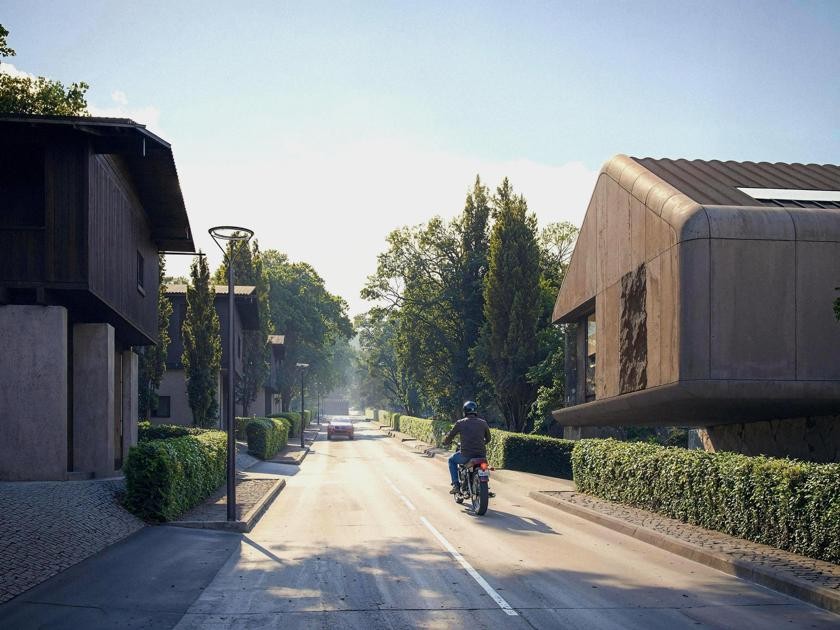
Gldanula Central Residence residential complex in Tbilisi features a distinctive and easily recognizable architectural identity, where the external design is fully aligned with its technical foundation. Every element — from the facade articulation to the interior spaces — has been developed with a consistent level of precision and coherence. The planning structure is designed with practical functionality and visual logic in mind, giving the interiors clarity and order. Overall, the project is tailored to the demands of urban living and the efficient use of space.
Advantages
- quiet location with no through traffic;
- educational institutions within walking distance;
- memorable architectural appearance with clearly defined facade geometry;
- well-designed system of evening and nighttime lighting;
- use of modern construction technologies;
- enhanced sound insulation between apartments and external structures;
- panoramic window openings;
- high ceilings;
- low-noise elevators for both passenger and freight use;
- landscaped courtyard with restricted access;
- 24/7 video surveillance system;
- carefully organized internal courtyard space;
- conditions for comfortable movement of people with limited mobility;
- secure parking for vehicles;
- flexible purchase options;
- balanced pricing policy;
- developer with a proven track record of project delivery.
Location
The Gldanula Central Residence complex is located at Gldanis Khevi, plot 02-145, in a part of the capital where natural elements are combined with well-structured urban development. The distance to the Kura River exceeds two kilometers, allowing residents to enjoy nearby natural routes without being tied to overcrowded central districts. This location makes it possible to balance everyday activities between work and outdoor leisure.
The surrounding area consists of mid-rise buildings arranged with thoughtful spacing and balanced density. There are no industrial facilities or high-traffic highways in the immediate vicinity, which has a positive impact on both the acoustic environment and ecological conditions, supporting a stable and comfortable living atmosphere.
The Tbilisi Reservoir is located approximately six kilometers away. This area is used for walking, sports, and outdoor recreation. The presence of a large body of water expands leisure opportunities and offers an alternative to urban entertainment scenarios.
The infrastructure covers all key aspects of daily life. Shops, medical facilities, educational institutions of various levels, and service providers are accessible within walking and short driving distance. This distribution allows for efficient route planning with minimal time expenditure and supports a consistent daily schedule.
The location is well suited for those who value a balanced combination of business activity and a calm surrounding environment. The ability to quickly switch between work, relaxation, and walks is combined with maintained privacy and high mobility within the city.
Nearby infrastructure
Gldani is characterized by a wide range of services covering everyday needs, leisure, and various types of amenities. Grocery stores, supermarkets, and local retail outlets with essential goods are located within a 10–20 minute walk. Pharmacies, bank branches, dental clinics of different levels, and food establishments are also available. This variety of formats allows residents to choose the most suitable option depending on their needs — from a quick snack to a full meal or a business meeting.
Social infrastructure includes Orthodox churches that serve as both religious and community centers. The Police Academy is located within two kilometers and functions as a training base for law enforcement professionals. The presence of such an institution highlights the status of the area and its institutional significance.
The education sector includes Schools No. 59, 132, 160, and 167, as well as Kindergartens No. 107 and 184 and the School-Kindergarten No. 167. This distribution of educational facilities allows for a well-organized daily routine without complex routes. Education for different age groups becomes more structured, while commuting time is reduced.
Within a radius of one and a half kilometers, the shopping centers “Eurasia”, Gldani Plaza, and “Mary” are located. They offer a wide range of retail stores, service points, and family leisure areas. Nearby, there are cafes, restaurants, bars, and fast food outlets, providing options for various occasions — from business meetings to short daytime breaks.
Cultural life is supported by the Akhmeteli Drama Theatre, which hosts regular performances across various genres. For physical activity, a sports center with equipped halls and facilities for different types of training is available.
The infrastructure is further complemented by the Mega Center Gldani shopping and entertainment complex, which brings together retail stores, services, and entertainment venues under one roof. This allows residents to accomplish multiple tasks in a single visit and use their time efficiently without the need for long trips.
Overall, the area stands out for its high concentration of services covering everyday, educational, cultural, and leisure needs. All infrastructure elements are designed to reduce time consumption and simplify daily routines.
Transport connectivity
The road network is evenly planned, without load imbalances, which simplifies navigation and allows for flexible planning of daily movements. Routes are logically distributed, so trips can be adjusted to work tasks, education, and personal matters without unnecessary time loss or complex transfers.
A public transport stop is located 140 meters away. Bus routes No. 351 and No. 373 pass through it. The presence of multiple directions expands route options and makes it possible to consider schedules, traffic intensity, and final destinations. This reduces dependence on a single transport scenario and allows for quicker adaptation to changing road conditions.
Bus connections provide convenient access to the Akhmeteli Theatre metro station, located just under four kilometers away. The metro remains a stable foundation for regular commuting, enabling adherence to precise schedules and avoiding the impact of surface traffic.
Within approximately three kilometers, there is the Gldani bus station, serving intercity and regional routes. About two kilometers away, the Avchala railway station operates, providing connections to key routes across the country. The presence of these transport hubs expands mobility options and allows for combining different modes of transport within a single journey.
For air travel users, the distance to Shota Rustaveli International Airport remains an important factor. A car trip under standard traffic conditions takes around forty minutes, simplifying flight planning and reducing the risk of delays when heading to the airport.
A well-developed network of roads and routes allows for building personalized mobility logistics. Travel becomes more predictable, with the ability to plan routes in advance and efficiently allocate time in everyday commuting.
Architecture and project features
Gldanula Central Residence is a seven-storey building constructed using monolithic frame technology, providing a clear structural foundation and stable geometry throughout the entire volume.
The composition of the building is based on strict horizontal lines and the rhythmic repetition of balcony structures, giving the facade a cohesive and structured appearance.
The volume of the building is designed in a restrained architectural language, with emphasis on the contrast between light surfaces and darker elements. Light facade planes serve as the base layer, while dark horizontal bands and window frames define the graphic character and depth. This color contrast enhances floor readability and emphasizes proportions. The visual rhythm is reinforced by alternating projecting balconies that form a continuous line along the perimeter, adding dynamism to the facade.
The ground level is highlighted by a lighter structural solution with supporting columns, creating a “raised volume” effect. This approach visually reduces the weight of the base and adds a sense of lightness. Glass surfaces on the first level enhance transparency and openness, creating a smooth transition from the exterior environment to the interior functions.
Balcony slabs feature clear geometry with pronounced horizontal edges. The railings combine glass and metal elements, contributing to a neat and visually lightweight facade. The repetition of these elements forms a rhythmic structure that is readable from different angles and strengthens the overall cohesion of the design. The rear facade is designed in a more restrained manner: large light planes are complemented by vertical inserts of stairwell blocks. This approach highlights the functional structure of the building and creates contrast between representative and utilitarian sides, while maintaining a unified design language.
The roof is defined as a clearly outlined upper level with a perimeter railing that completes the silhouette and gives it a finished look. The top tier is visually separated from the main mass, making the composition appear layered and balanced. Special attention is given to the evening lighting system. Night illumination is integrated into the facade elements, highlighting balcony lines, horizontal bands, and vertical accents. Light is distributed evenly, without harsh contrasts, emphasizing the building’s geometry and enhancing its visual presence after dark.
Overall, the complex demonstrates disciplined lines, precise volumetric composition, and restrained decorative elements. The contrast of materials, the rhythm of balcony sections, and the well-designed lighting scheme create a distinctive and recognizable silhouette focused on durability and visual clarity. Vertical circulation between floors is provided by low-noise elevators of international manufacture. The engineering systems include automated fire response systems and reliable utilities that meet international safety standards. Entrance areas are equipped with intercom-controlled doors, ensuring secure access. Conditions for people with limited mobility are provided, expanding the functional accessibility of the complex.
Internal common areas are finished with durable, wear-resistant materials. A restrained color palette is used, along with flooring designed to withstand heavy use and a carefully planned lighting scheme intended for long-term operation. The lobbies are perceived as a logical continuation of the overall concept, maintaining a consistent level of quality.
The Gldanula Central Residence complex reflects precise structural planning, a refined architectural expression, and engineering reliability. Its foundation is based on rationality, clear organization, and a focus on long-term operation without excessive decorative elements.
Landscaping and internal territory
According to the project, the inner courtyard is isolated from external flows and closed to unauthorized access. Controlled entry eliminates transit routes, increasing privacy and reducing the likelihood of accidental presence. Within the courtyard, a calm and balanced atmosphere is maintained without excessive noise or visual overload, contributing to a sense of order and security.
The landscaping layout is designed with everyday activity in mind. A network of pedestrian pathways follows a clear scheme, connecting entrance areas and access roads. Routes around the building are arranged to ensure smooth movement even during peak hours. Intersections are minimized, and directions are intuitive, making navigation within the courtyard simple and reducing the risk of congestion.
Within the enclosed courtyard, away from main circulation paths, benches are placed for rest and short stays. Lighting fixtures provide evenly diffused illumination, sufficient for safe movement during evening and nighttime hours. The lighting scheme avoids harsh contrasts, preserving a calm visual environment and preventing sensory overload.
An underground parking facility is being developed for residents’ vehicles, freeing the courtyard from traffic and increasing its value as a pedestrian-friendly space. A significant portion of the area is dedicated to landscaping: trees and decorative shrubs are planted, lawns are arranged, and perennial plants are used. The greenery serves practical purposes — reducing external noise, softening temperature fluctuations, and visually separating the courtyard from surrounding developments.
Security is ensured through a 24/7 video surveillance system. Cameras are positioned to cover key areas, enabling monitoring and quick response to any irregularities. This system limits unauthorized access and helps maintain a stable and orderly environment. The entire courtyard is organized according to a clear operational logic. Landscaping elements and technical systems function in coordination, providing predictability, order, and a consistent sense of safety.
Apartment sales
Gldanula Central Residence features a limited number of apartments with varying sizes and internal layouts. Configurations differ in proportions and structure, making it easier to select an option tailored to specific needs and usage scenarios. Layouts are designed to maximize natural light, while room dimensions provide a sense of openness and spatial comfort. Interior design is based on clean lines and restrained solutions, giving spaces visual lightness and clarity.
Apartments are delivered in a prepared condition suitable for further customization according to individual design concepts. Engineering systems are already installed throughout the units, reducing the effort required for equipment connection and accelerating the transition to finishing works. Partitions are constructed according to the layout scheme, clearly separating functional areas. The floor base is completed with a leveling screed, suitable for various types of flooring — from wood to ceramic. Walls are prepared for final finishing, shortening renovation timelines and allowing faster progression to interior design.
This level of readiness provides owners with freedom in choosing style and organizing interior space. The distribution of areas, selection of materials, and finishing approach remain a matter of personal preference, allowing each unit to reflect individual characteristics and support a comfortable daily rhythm.
The base price includes essential technical equipment. A durable entrance door with a reliable locking mechanism is installed, along with an intercom system. These elements are already integrated and require no additional initial investment. Large-format window systems allow a significant amount of natural light to enter and enhance the sense of depth within the space. Multi-chamber metal-plastic profiles with energy-efficient glazing are used, helping retain heat during colder seasons and reduce thermal loss.
All apartments include open balconies. Their function varies depending on the owner’s preferences: from placing greenery and creating relaxation areas to storing seasonal items. The structural design is intended for active use without limitations on functionality. Current purchase conditions are specified through the sales department. Specialists provide detailed information and assist in selecting the optimal option based on financial parameters, timelines, and individual requirements.
Gldanula Central Residence is based on a rational distribution of space and a clearly structured internal organization. High-quality construction materials and engineering systems are used, ensuring reliable long-term performance.
The project is aimed at buyers considering Tbilisi real estate as a well-balanced investment with long-term potential. A restrained architectural approach, precise adherence to technical standards, and consistency in construction stages enhance reliability and increase long-term value.
About the developer
Development 11 entered the market with a clearly defined business profile and a focused professional direction. From the outset, the company has concentrated on the construction of multi-apartment residential buildings and commercial properties, prioritizing engineering precision and technological discipline. Within a relatively short period, the company has secured a notable position in the industry, confirming its credibility through completed projects in Tbilisi and an accumulated portfolio of delivered developments.
The company structures its production cycle with a high level of control at every stage. Engineering preparation, structural components, installation processes, and finishing works undergo consistent verification, which is reflected in the final quality. Completed buildings demonstrate individuality, strict geometry, and careful attention to detail. The applied technologies reflect professional confidence and a systematic approach to construction, directly influencing durability and operational stability.
The company’s activities go beyond standard development scenarios. At its core is a commitment to a holistic perception of projects, where priority is given to rational organization of layouts, advanced engineering systems, and restrained facade design. New technological tools are introduced with practical goals — extending building lifespan and improving performance characteristics. This approach reinforces Development 11’s reputation as a company focused on stable results, engineering precision, and long-term development strategy.
Maybe you are interested in other projects


Which apartments are available for sale in Gldanula Central Residence in Tbilisi?
For sale are 2-room, 3-room.